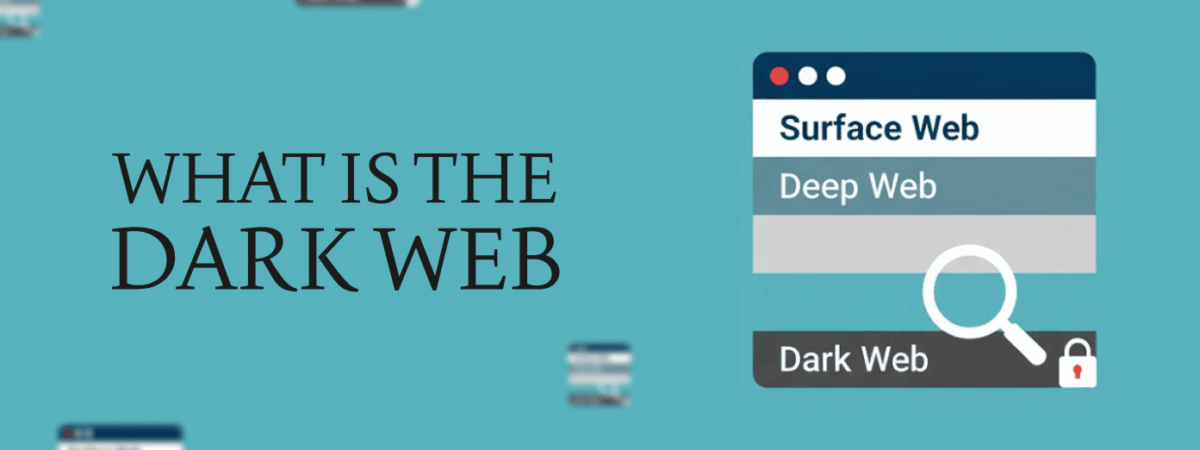
It’s okay to imagine the internet like a giant, magical ocean. There are parts of this ocean you can visit every day, like the top of the water where everyone can see and swim. These parts are your regular YouTube, Google, and accessible news websites. However, these bright parts of the internet are only a tiny piece of the entire picture.
There’s a part that’s deeper beneath the sunny surface. This place is harder to get to with several secret and hidden areas. This is the part of the internet people refer to as the dark web. You can’t find the dark web with a normal search engine, and on most occasions, you need a password to get access. But why all of these precautions, though?
Many scary stories have been told about the dark web, some of which are often right. This is why it’s not easy to find and access. But there are good sides too. This article will explore the entirety of this part of the internet, and we’ll learn why it stands out and how to safely access it.
Introduction to the surface web, the deep, and the dark web
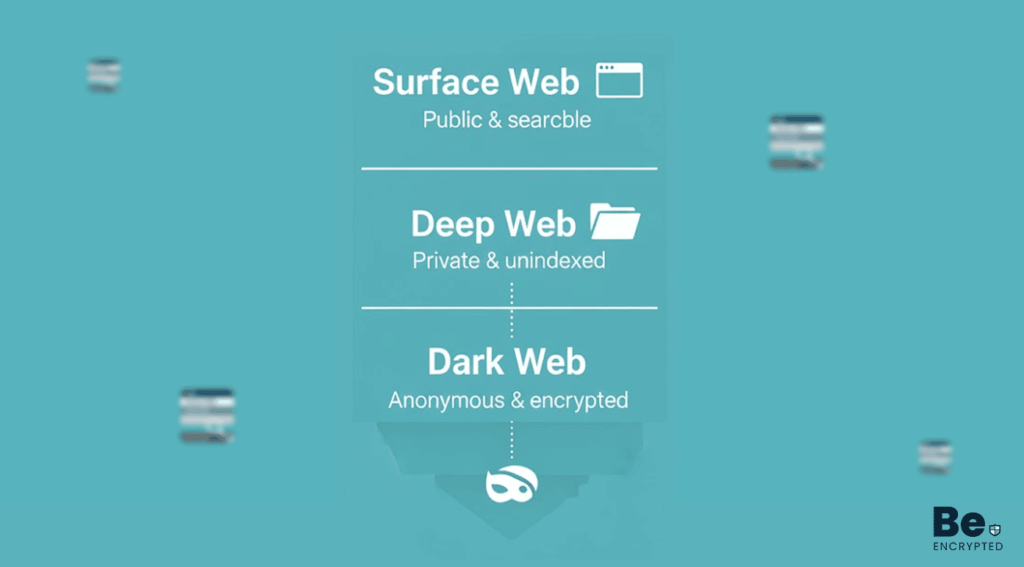
Breaking things down, let’s review the three layers of the internet in detail:
1. The surface web
Also known as the Open Web, this is a part of the internet we use every day. It’s the tip that’s sticking out of the water. You can find websites that are easily discoverable on search engines here (the kind of stuff that easily pops up on Yahoo, Bing, and Google).
A good example of content on the surface web is websites like Wikipedia, news sites, online stores, YouTube, and, naturally, all the publicly available information that is easily accessible.
If it’ll aid better understanding, the Surface Web is comparable to the main streets and large buildings in a giant city. Google is the map of the entire city, and it can show you all the public places using visible roads (links). Shocking as it may seem, this part of the internet makes up only 5% of the entire mass. Now, imagine what is in the other 95%.
2. The deep web
The deep web is the part of the iceberg below the water’s surface. It represents about 90% of the internet and has important, and yes, secret information. Yes, “deep” in this case doesn’t mean something is bad or scary. It relates to privacy and keeping things private.
The fascinating thing about the deep web is that you access it a lot more than you think. For instance, your email inbox. You can’t randomly search Google for someone’s email and access their message content. At the very least, you have to log in with their password, and that login screen is the door to the private part of the deep web.
Here are some other examples of private, member-only places that make up the deep web:
- Private social media messages on Facebook, Instagram, etc.
- Your online banking account.
- Medical records and private files are protected by companies and governments.
- Your Netflix account after being logged in.
- Digital libraries and academic databases.
It is important to note that these places aren’t randomly found on Google because they are password-protected and not meant for the public. Things are basically kept hidden on the Deep Web to ensure your information is safe. When the information is required to be super private, it is moved to a smaller piece of the Deep Web known as the Dark Web.
3. The dark web
This is the very, very bottom tip of the giant iceberg. It is a tiny piece with loads of information that requires top privacy and anonymity. Access to the dark web is through special keys. One such key is a dark web browser, and a popular option is the Tor browser.
Due to the protection surrounding the dark web, it is famous for being a place where good and bad secrets are kept. Bad in the sense that some people use it to carry out illegal and dangerous activities. However, it is also beneficial to those who simply want to use it for the encryption tech.
In addition to the embedded encryption technology, other factors make the dark web unique. For a start, there is no indexing, so search engines like Google have no idea that these sites exist.
Also, dark websites are known to have special addresses. So while normal addresses would end in .com or .org, Dark websites could have .onion, zip, etc.
Another notable feature of the dark web is how it makes use of secret tunnels. To get to a dark website, your internet connection is usually passed through a bunch of scrambled, secret tunnels. These tunnels are extensive and go across different countries, making it impossible for anyone to know the location or personality of the users on them.
That said, if we were to distinguish clearly, the surface web is public, the deep web is private, and the dark web is covert and anonymous.
How to access the dark web and deep web securely
There’s this thrill that comes with performing a new activity, the rush of adrenaline as you attempt an extreme stunt. Well, venturing into the hidden part of the internet is one of them. But while it’s interesting, safety should be prioritized. There are disguises to be worn and rules to follow.
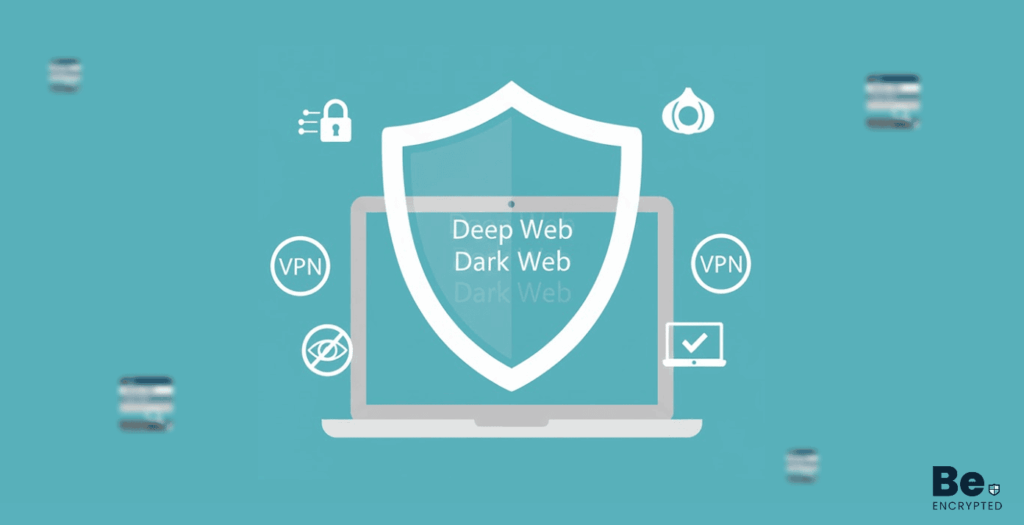
We’ve already established that the surface web is public and easy to access. Accessing the Deep Web is also a walk in the park when you’re in control of the correct passwords. However, the Dark Web protects its users in more secure ways than password control.
The steps below offer a way to access the dark web without issues:
1. Use a VPN
You’ll know about VPNs if you’ve watched a lot of spy movies. In the online world, a perfect disguise is a virtual private network (VPN).
Although in this case, you’re not literally going behind enemy lines. But since you can’t risk your internet service provider monitoring your digital footprints, you cover up.
A VPN is known to build a secret tunnel from your computer to the internet. This tunnel is so encrypted that your ISP can see you’re online but can’t make out your activities. So, your location is hidden, and you could have one leg in this city and another in the next.
Of course, with these explanations, there’s no underestimating how important a VPN is. However, the power lies in your ability to choose the right VPN service. These days, there are many of them, but a few things should be considered before making that decision.
The most important thing is to go with a service that you know and trust. Although some of the popular ones are very expensive, it is best to keep a budget you can manage. The only exception here is for VPNs with a no-log policy.
VPN services with a no-logs policy ensure that the service will not share any records of what you do online, and you don’t need to worry about stored data. Hence, they are worth every dime.
2. Download Tor browser
The next thing after getting a reliable VPN is to access the Dark Web. As mentioned earlier, access is through a special dark web browser—Tor Browser.
It is a clever name, as Tor stands for the “Onion Router,” and added to that, it has excellent features. Like the name, the browser has lots and lots of layers. So when you go to any site on the Tor network, the site passes your information through nodes in different countries.
Because of the encryption in the middle, it is impossible for anyone to trace back to you. Plus, the way it works, as it goes from one node to the other, it removes an encryption layer every time you are dark, untraceable, and anonymous.
Ready for this step? Here’s how to get your Tor Browser safely:
- Connect your device to a VPN
- Browse through the official Tor website.
- Download the correct app version based on your computer’s operating system.
- Install the browser.
- Open the browser and connect. You’re ready to explore.
3. Follow the rules
Inside the Dark Web, there are no rules. So every user needs to be extra careful and follow specific safety rules to be safe.
At the top of the rules required for safety is avoiding the use of your real personal details. The Dark Web is purely anonymous, so people shouldn’t know your real persona for any reason. From your real name to your email address and passwords, create and own new ones. Plus, based on what you intend to do, you can use more than one.
Next is the ‘No Downloads’ rule. The dark web is filled with so much malware and viruses, which makes downloading risky. No matter what the file is or how important, don’t do it. In addition to this rule, don’t buy anything you see. It can be difficult to distinguish real products from fake ones, so it’s best to avoid any transaction, more so if it requires you to let people into your home.
The other thing you’ll want to control is who you speak to. People on the dark web are countless, all masked with unique identities. You don’t know who is who. So, to be on the safe side, limit interactions with strangers. And, NEVER share personal credentials.
One tip you could copy from spy movies is “Cover your webcam” while on this unindexed web. A simple way is to place a piece of tape over the camera itself, saving you from hackers who want to access your privacy.
Finally, learn to disable scripts in your Tor Browser. This feature is found in the security settings, and disabling it can take off some features on the website. But rest assured, it’s the best way to protect yourself from malware.
What does the dark web boast or feature?
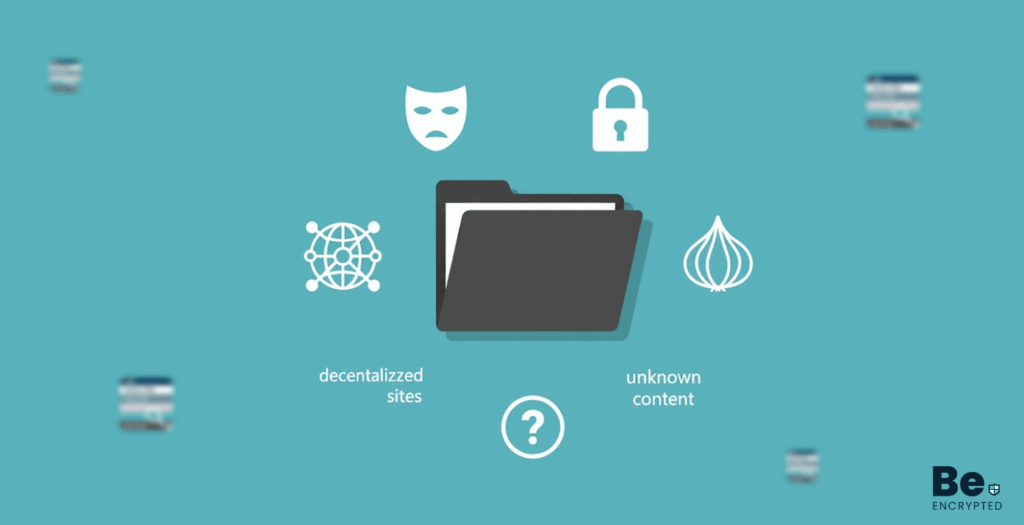
So many safety precautions, and you’re probably wondering what’s actually on the Dark Web that you need to be conscious of. Well, the answer is some good, some bad, and some really strange.
Let’s explore the different sides of the dice:
The good side of the dark web
The U.S. Naval Research Laboratory created the Dark Web for the purpose of allowing spies to communicate securely online. Basically, the core idea was to use the system to protect people’s privacy.
Despite the negative aspects, there are many people today who utilize the dark web for good, legal reasons. In particular, journalists and whistleblowers utilize the dark web for anonymous communication with their sources to avoid detection by governments or other powerful organizations.
The dark web is very useful in countries with oppressive governments. For example, in the context of extreme censorship, the dark web is a lifeline for communication, information sharing, organization, and talking about unfairness without being punished.
On a lighter note, some people don’t even use the Dark Web for any of the above reasons, but they prefer to keep their lives private. So, they go about their everyday browsing while covering their activities using the Dark Web.
Are you tired of the regular Facebook or X? There are social media sites on the dark web. These platforms are only different in the level of their privacy, but people can connect, post pictures, trend, and share ideas.
If your curiosity is piqued about what types of sites actually exist out there (from these privacy-focused social platforms to libraries and secure email services), we’ve compiled a detailed, current look at the top dark web sites today. It’s a good way to see the practical reality behind the theory.
The bad side of the dark web
It’s okay to say that the Dark Web is more known for its bad sides than its good. Unfortunately, the same privacy and anonymity that protect lives and pure intents also cover up crimes and illegality.
From the ground up, there is plenty of disturbing content and information sitting on the dark web that you would not want to come across. Therefore, the best option is to know them and be careful.
The most disturbing is the dark web marketplace. This is where people buy and sell things—in this case, illegal stuff. They trade using cryptocurrencies, so there’s no trace, and the identities of the traders stay anonymous. If you’re curious about which of these markets are currently active, our detailed guide to the 17 best dark web marketplaces today breaks down the platforms shaping this underground economy.
Popular illegal things that are sold on the Dark Web include drugs, weapons, classified information, body organs, security codes, stolen credit card information, and top secrets.
The dark web is also a good breeding spot for hackers. In fact, they create many of the private sale platforms on the system where they can show off malware and get hired for jobs. Criminals who are in search of hackers to conduct deadly cyberattacks visit the Dark Web to contract their preferred candidates and pay when the job’s done.
There’s no law and order in the dark web, so expect to see a lot of things you may not see in regular life. Some of these could include open pornography sites, extremist forums, antagonist groups, etc. Scams are everywhere, too, so keep your eyes wide open, or you’ll fall deep into them.
Is it illegal to get on the dark web?
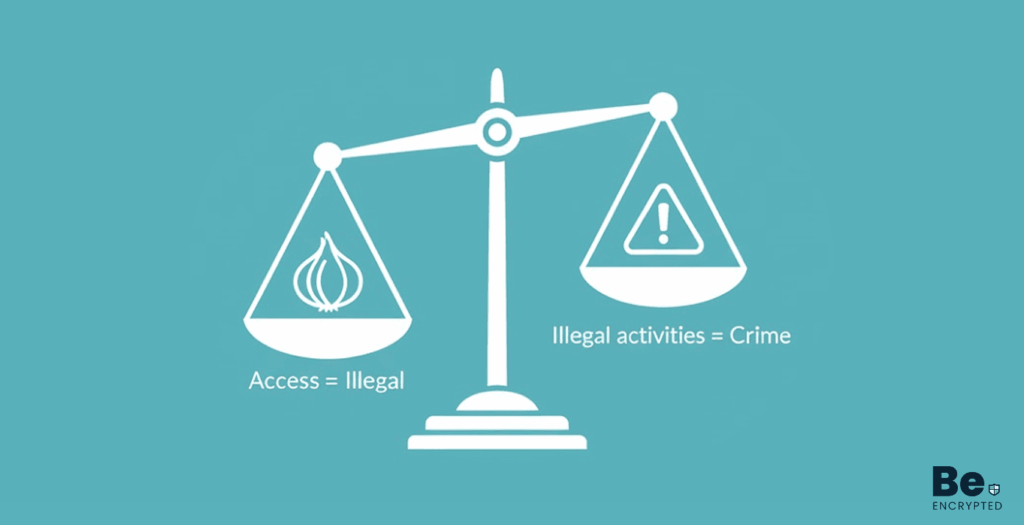
There’s nothing illegal about going on the dark web. BUT! How you use it and what you do here determines whether it’s illegal or not. Are you reporting abuses, human rights abuses, and other misconduct without showing yourself? Then you’re good to go. But, if you’re selling substances, malware tools, or black market? Then, you’re on the bad tracks.
Irrespective of its notorious concept, most reasons people go to this part of the internet is to foster anonymity and dodge sites and services with trackers. Without a doubt, immunity is another crucial reason. How? The same encryption and protection covering the good users covers bad actors.
This way, it’s almost impossible to endanger the real identities of the parties hiding from crime or providing sensitive information to law enforcement. But don’t think you can get away 100%. There are honeypots for nefarious actors that can lure and trap!
Is using Tor illegal?
Again, there’s no “illegal” tag slapped onto Tor or other anonymized web browsers. However, based on your jurisdiction, using it may not be acceptable. For example, in countries where censorship is heavy, like China, Iran, and Russia, you could attract legal repercussions for using Tor or even a virtual private network (VPN).
Moreover, your actions while using the browser can incriminate you as well, even though the browser is legal. Share illegal porn, join cyber terrorism, or pirate copyrighted content, and you’d be dealing with the harsh side of your jurisdiction’s law.
Are websites on the dark web illicit to visit and use?
It depends again on what you’re looking for. The dark web is organized so that different websites serve different purposes. You want black market deals, you’d find the right site for it. If you want to act as a whistleblower or share a file with journalists, there’s one for you.
Visiting and using illegal sites on the dark web is not advisable and could attract law enforcement because they’re here too, watching in the shadows with their honeypots ready.
Besides that, you don’t want to click on fake sites hyperlinked with malware or trojans. At the end of the day, using or visiting sites on the dark web could be illicit and risky at the same time.
Types of dark web threats
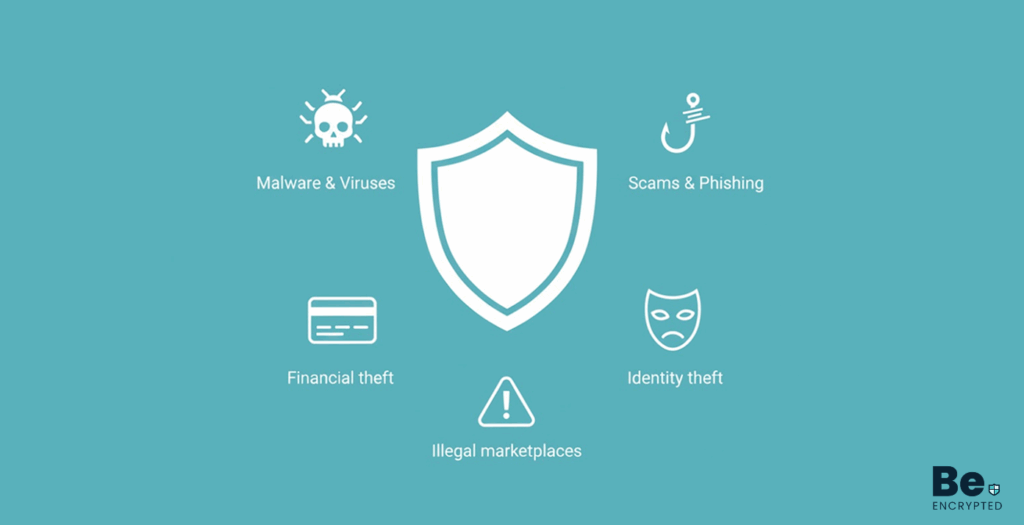
Here are some threats on the dark web that you could face because they are common:
1. Malware – Malicious software
These tools are fully alive to cyberattacks. They infect your device with ransomware, botnets, keyloggers, or even phishing malware once you let your guard.
So, even with your VPNs and Tor browser, you must have endpoint security protocols on your device to catch early infection of malicious software.
2. Government surveillance
Illegal marketplaces thrive on the dark web, so government authorities lurk around waiting for loopholes to catch culprits.
They use custom tools to infiltrate and evaluate what’s happening here. That’s how these authorities differentiate between bystanders and patrons.
3. Scams
Imposters and fake services like “hitmen” profit from victims. Whether you’re good or bad, you’re at risk. How? You could pay for a hacking tool, fake ID, or stolen data and never receive it.
Some other illegal services, like trafficking weapons and humans for sex, and paid assassinations, could facilitate scams too. Victims get tricked out of huge amounts of money.
Tips to protect yourself against exploitation on the dark web
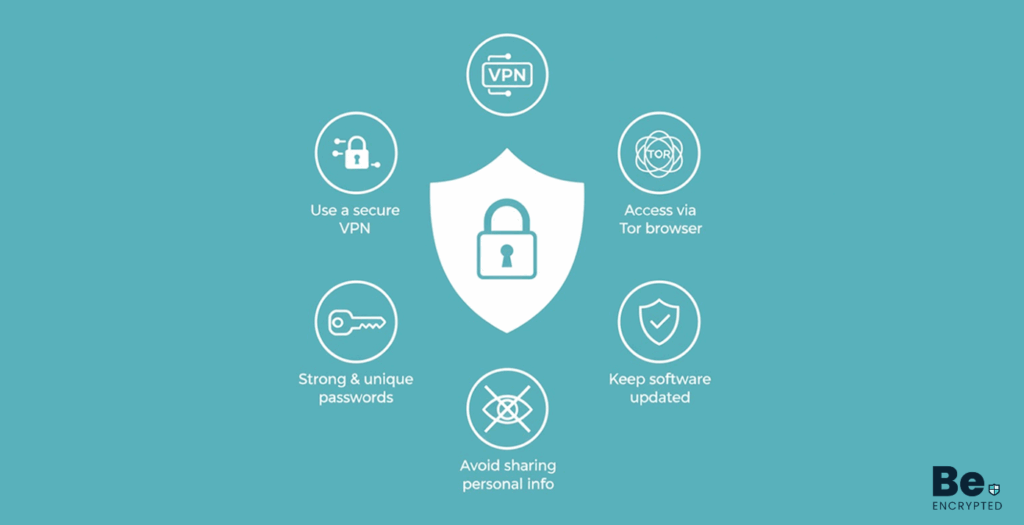
Whether you’re visiting as a business, journalist, etc, you need these precautions to guard against exploitation on this part of the internet:
- Protect your private credentials. Never give out your passwords, bank details, physical addresses, and/or your social security numbers.
- Don’t click on links anyhow. You don’t want to run keyloggers or some kind of malware on your device.
- Work with premium internet security tools such as Kaspersky or VPNs to guard against viruses and ID theft.
- Never use your real-life data for your online persona. Avoid usernames that could tie to your legal names. Use an email different from your personal emails.
- Use a non-admin local account on your computer. It slows or halts exploitations compared to a full admin user account.
Closing word
The internet contains so much more than we can see or comprehend. Search engines and social media channels are merely the surface web, making up 5% of the internet. Meanwhile, there’s the Deep and the Dark Web. We keep our private information on the Deep Web, and we keep our secrets on the Dark Web.
However, keeping secrets on the dark web doesn’t make it pure evil. It is simply a tool that can do good in the right hands and a lot of wrong in the wrong hands. That said, just like every top/shelf technology, there are two sides to the coin. So wherever your curiosity takes you, be prepared in every way you can be.
FAQs
Share this article
About the Author

Farwa is an experienced InfoSec writer and cybersecurity journalist skilled in writing articles related to cybersecurity, AI, DevOps, Big Data, Cloud security, VPNs, IAM, and Cloud Computing. Also a contributor on Tripwire.com, Infosecurity Magazine, Security Boulevard, DevOps.com, and CPO Magazine.
More from Farwa SajjadRelated Posts
25+ Best Dark Web Sites for 2026 (Tor, Onion Links)
KEY TAKEAWAYS Here is a fast-access list of the top dark web sites for those ready to explore the hi...
14 Best Dark Web Monitoring Tools and Solutions in 2026
KEY TAKEAWAYS By monitoring the dark web, organizations can stay protected and remain on the latest ...
11 Best Dark Web News Sites in 2026
KEY TAKEAWAYS If you live in a country where you don’t have internet freedom and face extreme ...
The 17 Best Dark Web Marketplaces in 2026
KEY TAKEAWAYS Accessing any darknet marketplace is dangerous because it is known to be a hub for ill...
Dark Web vs. Deep Web: What’s the Difference?
KEY TAKEAWAYS The Deep and the Dark web are the hidden part of the internet. The major difference be...
4 Easy Steps to Access Dark Web on Your Phone Safely in 2026
The dark web has been a source of mystery and caution, and accessing it seems complex. Let...